
The Path Nobody Tells You About
Most creative producer career advice starts with portfolio school and ends with landing a junior role at a holding company agency. That path works for some people. Mine looked nothing like it. I started at 3D Systems producing for NASA, Coca-Cola, and Intel, then launched Production Soup in 2012 and spent nearly a decade directing campaigns for Nike, Microsoft, Samsung, and Western Union through 180 Amsterdam, 72andSunny, Razorfish, and Game Seven across markets spanning Tokyo, Sydney, London, Dubai, Mexico City, and India. During that run I co-founded 3D Brooklyn, a maker-innovation hub that partnered with History Channel and five major television networks. I produced music videos with will.i.am and The Black Eyed Peas. Then I spent 4.5 years inside a Fortune 50 telecom communications team, running executive communications across the company. These were not sequential stops on a career ladder — they overlapped, and that overlap is the point.
The nonlinear path matters because each role taught me something the traditional agency track does not. 3D Systems taught me how large organizations actually make creative decisions. Nearly a decade running Production Soup through top agencies taught me world-class creative direction across markets. 3D Brooklyn taught me how to build a company from zero and create partnerships across industries. The Fortune 50 communications room taught me what technology actually does versus what vendors claim it does. And all of it combined is what makes running a solo production company possible today.
3D Systems — Video Producer & Director
Produced for NASA, Coca-Cola, Intel, Western Union, and W Hotels. Intel Ultrabook global launch across Tokyo, Sydney, and Mexico City. Learned enterprise procurement, vendor coordination, and quality control at large-company scale.
Production Soup — Producer & Director
Nearly a decade directing campaigns for Nike, Microsoft, Samsung, and Western Union through 180 Amsterdam, 72andSunny, Razorfish, and Game Seven. Directed music videos with will.i.am and The Black Eyed Peas. Learned world-class creative direction and how much of the agency model exists to serve itself.
3D Brooklyn — Co-Founder
Built a maker-innovation hub from scratch. Created a History Channel partnership and additional network relationships. Launched the RefilUSA sustainable hydration initiative. Learned what it feels like when payroll depends on your next pitch.
Fortune 50 telecom — Executive Communications
Ran executive communications across the company. Learned the gap between an AI demonstration and a production system, which informs every tool I evaluate today.
Production Soup — AI-Powered Studio
Solo AI-powered production in Dallas. Everything I learned compressed into a company that delivers enterprise-quality work without enterprise overhead.
Lesson 1: Enterprise Budgets Teach You More Than Creative School
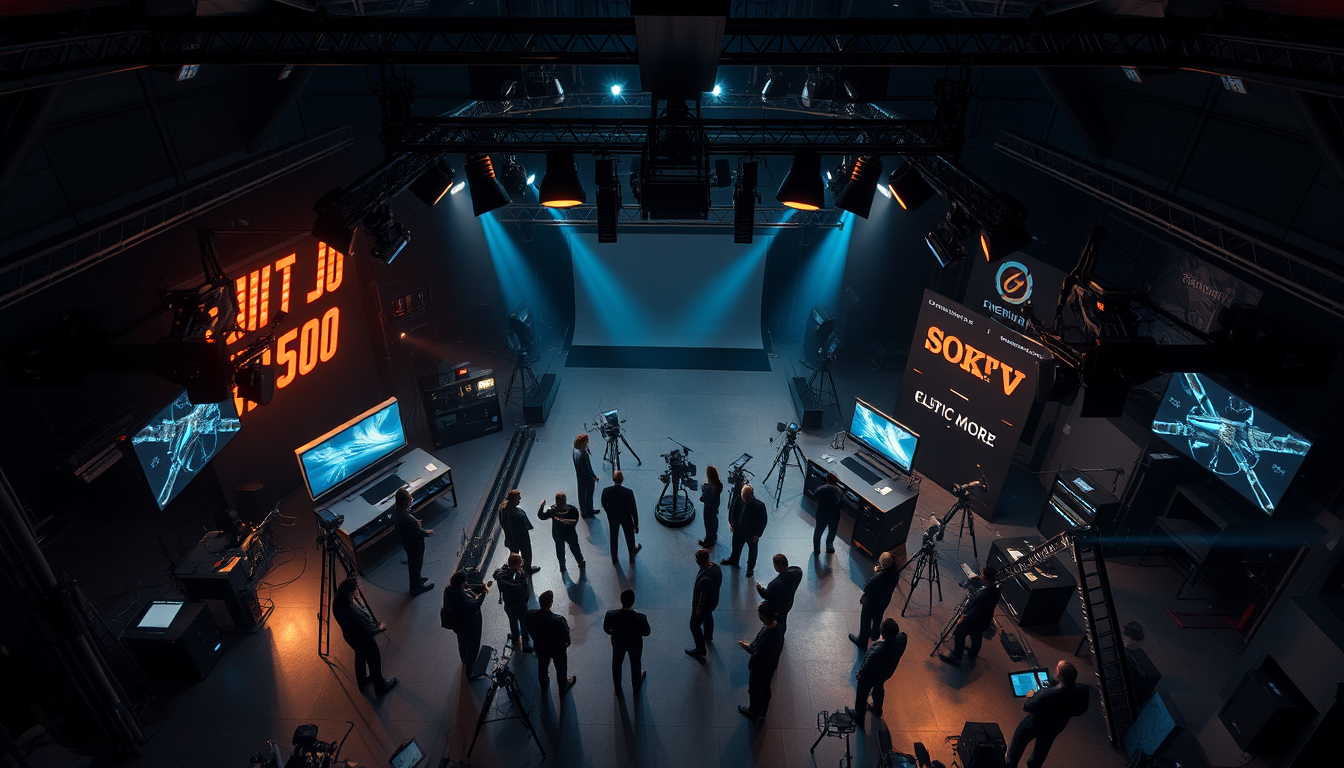
When you manage a $2 million campaign budget for Intel, you learn things about creative production that no course teaches. You learn that the largest cost in most campaigns is not production — it is coordination. The meetings, the approval rounds, the vendor management, the legal review, the asset trafficking across platforms. Production is only one part of the spend. The rest is process.
This is the insight that eventually led me to build Production Soup. If coordination is the majority of campaign cost, then a production company that eliminates coordination overhead can deliver the same quality at a fraction of the price. That is not a creative insight. It is a structural one. And it only becomes obvious after you have managed enough large budgets to see the pattern.
The specific numbers matter. Across nearly a decade running Production Soup — producing for clients like NASA, Coca-Cola, Intel, and W Hotels — a typical Large-enterprise campaign involved 8-12 vendor relationships, 3-5 rounds of internal review, 2-3 rounds of client review, and 4-6 weeks of asset trafficking after creative approval. A campaign that could be produced in 3 weeks took 10-12 weeks because of the process around it.

Lesson 2: What Nike Creative Direction Actually Involves
Working on Nike campaigns through 180 Amsterdam and 72andSunny — alongside Samsung and Western Union work through Razorfish and Game Seven — taught me something counterintuitive about creative direction: the brands with the strongest creative reputations are also the most disciplined about constraints. Nike does not succeed because they give creatives unlimited freedom. They succeed because every creative decision is filtered through a framework that has been refined for decades.
The practical lesson: creative quality comes from constraints, not from resources. A clear brief with specific guardrails produces better work than an open brief with unlimited budget. Every client I work with at Production Soup gets a structured brief process that forces clarity before production starts. This is not bureaucracy. It is the thing that separates professional production from expensive guessing.
The best creative work I have ever seen came from the tightest briefs. Unlimited creative freedom is not a gift to the production team. It is a failure of strategy.
The other lesson from Nike is about iteration speed. At 72andSunny, the creative review cycle on a Nike campaign could move from concept to approved direction in 48 hours. Not because people were rushing, but because the decision-making framework was clear. Everyone in the room knew what "on-brand" meant. Compare that to campaigns where the brand guidelines are vague or nonexistent, and every review becomes a philosophical debate about what the brand stands for. That debate is expensive.
Lesson 3: Why the Agency Model Is Broken
This is the lesson that made me leave the agency world. The traditional advertising agency model has a structural problem: the business model incentivizes headcount, not outcomes. Agencies bill on retainers that are sized by team composition. A retainer that supports an account director, two account managers, a strategist, a creative director, two designers, and a producer generates more revenue than a retainer that supports just a producer who delivers the same output.
This is not a criticism of the people at agencies. Most agency professionals I have worked with are talented and hardworking. It is a criticism of the economic structure that requires every engagement to carry the overhead of an organizational chart that the client does not need. A mid-market company spending $15,000 per month on creative production does not need 8 people on their account. They need one person who can deliver finished work.
The second structural problem is the strategy-production gap. Traditional agencies position strategy as their premium offering and treat production as a commodity. But clients do not pay for strategy in isolation. They pay for strategy that ships as finished creative. When the strategy team and the production team are different groups with different incentives, the handoff between them is where quality degrades and timelines inflate.
The Agency Overhead Problem
- Retainer-sized teams: clients pay for organizational roles (account directors, strategists, project managers) that exist to coordinate the agency, not to produce creative work
- Strategy-production gap: the people who write the brief and the people who build the deliverables are often in different departments with different metrics
- Revision inflation: more people in the approval chain means more rounds of revision, each adding 3-5 business days and diluting the original creative vision
- Risk avoidance as culture: agencies with large retainers optimize for not losing accounts, which means avoiding creative risk, which means producing safe, forgettable work
Lesson 4: How to Build What Replaces It
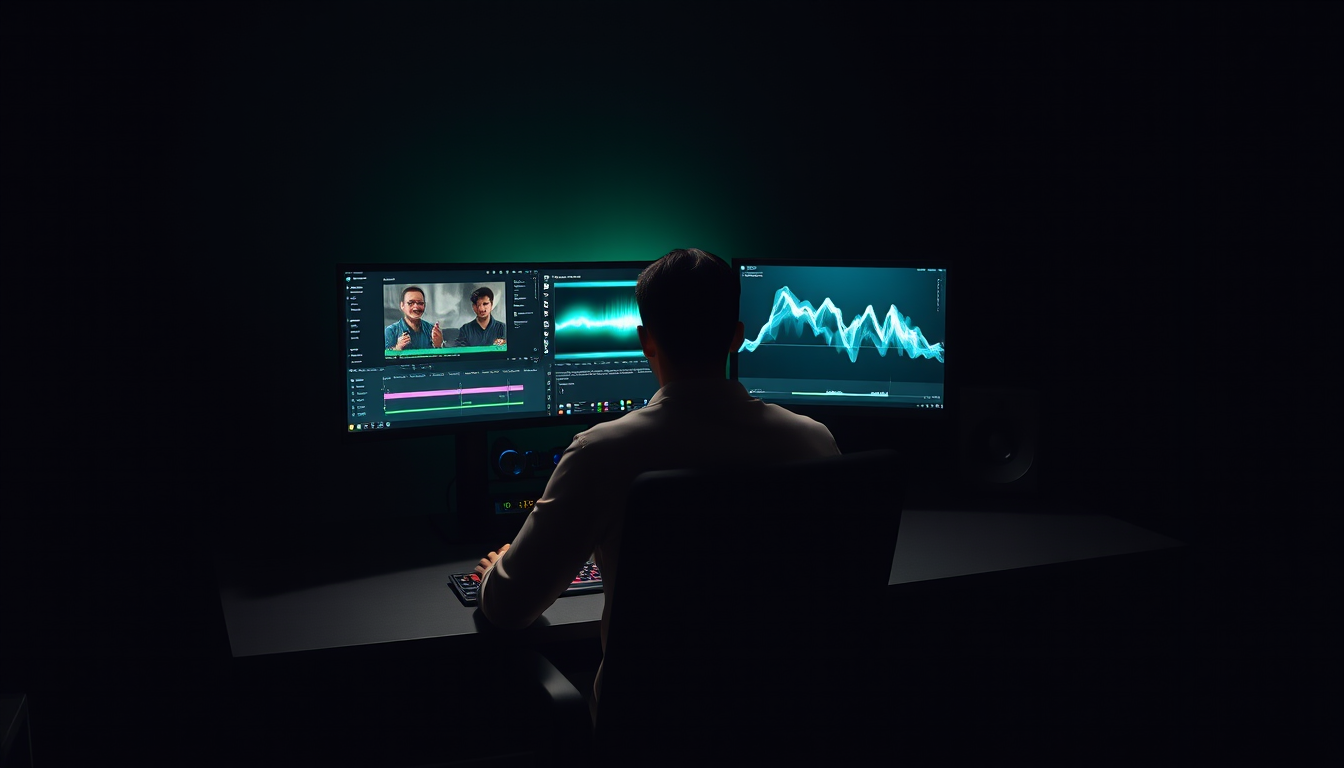
The alternative to the agency model is not "freelancer with a laptop." That model has its own problems: inconsistent availability, limited capability range, no production infrastructure, and no systematic quality control. The alternative is what I call the AI-augmented solo production company: one experienced producer with a technology stack that replaces the coordination overhead that agencies charge for.
At Production Soup, I handle every client relationship directly. There is no account manager between the client and the person doing the work. The AI-assisted system handles competitive research, concept generation, quality assurance, and deliverable verification. I make every creative decision and approve every deliverable. The technology handles the plumbing between decisions.
This is not about replacing humans with AI. It is about replacing process with technology. The meetings that existed to update people who needed to be updated — replaced by automated status tracking. The review rounds that existed to catch technical errors — replaced by automated QA that checks aspect ratios, audio levels, and format compliance before I review for creative quality. The research phase that required a strategist spending 3 days on a competitive audit — compressed to hours by AI-assisted analysis that I verify and augment with industry judgment.
Lesson 5: Why Dallas, and Why Now
I moved to Dallas deliberately. The Texas Triangle is experiencing the largest corporate relocation wave in the country. Companies moving headquarters to DFW, Austin, and San Antonio need production capability, and the local market has not caught up to the demand.
The timing is equally deliberate. The AI production tools that make a solo operator viable did not exist two years ago. Local image generation, automated quality control, workflow orchestration, and AI-assisted research — these capabilities crossed the threshold from experimental to production-ready in 2025. Starting a year earlier would have meant too much manual work. Starting a year later would have meant more competition for the same positioning.
The geographic bet is also a cost structure bet. Operating in Dallas instead of New York or Los Angeles means 30-50% lower overhead, which translates directly into more competitive pricing for clients. A mid-market company in DFW that would pay $25,000 per month for a traditional agency retainer in Manhattan can get equivalent production quality for $8,000-12,000 from a Dallas-based AI-augmented producer.
What I Would Tell Someone Starting Today
If you are considering starting a creative agency or production company in 2026, here is what I have learned condensed into actionable advice:
- Get enterprise experience first. You cannot serve enterprise clients without understanding how enterprises make decisions. Budget governance, procurement processes, legal review, multi-stakeholder approvals — you need to have navigated these from the inside before you can navigate them as an outside partner.
- Invest in infrastructure before branding. Your production system, AI tools, quality control systems, and project management workflows matter more than your website, logo, or social media presence. The infrastructure is what lets you deliver. The branding is what gets you the meeting.
- Start with a niche that is underserved. "We do everything for everyone" is the least differentiated positioning possible. Pick a market segment, a content type, or a vertical where the existing options are overpriced or underperforming. Build depth before breadth.
- Price on value, not on hours. The moment you price by the hour, you are incentivizing yourself to be slow. Price on deliverables. A client does not care whether a campaign video took 4 hours or 40 hours to produce. They care whether it drives results.
- Build the relationship layer that AI cannot replace. AI compresses production time. It does not compress the trust-building, strategic alignment, and creative taste that make a client relationship work. Those are the skills that differentiate you from the next person who has access to the same AI tools.
Key Takeaways
- Enterprise experience is non-negotiable for running a credible production company — budget governance and stakeholder management cannot be learned from tutorials
- The largest cost in production is coordination, not creative execution — eliminating coordination overhead is a bigger lever than improving creative speed
- Strong creative direction comes from constraints, not unlimited freedom — structured briefs produce better work than open-ended ones
- The agency model is structurally broken because it incentivizes headcount over outcomes — clients pay for teams they do not need
- AI-augmented solo production replaces process overhead with technology, not humans with AI — the producer still makes every creative decision
- Geographic and timing arbitrage matters — the right market at the right moment with the right infrastructure is a compounding advantage